Choosing a loyalty card
Stamps or points: which loyalty card suits your business?
A stamp card rewards coming back. A points card rewards spending. Which one suits you comes down to one question: do your customers spend about the same each visit, or does it vary a lot?
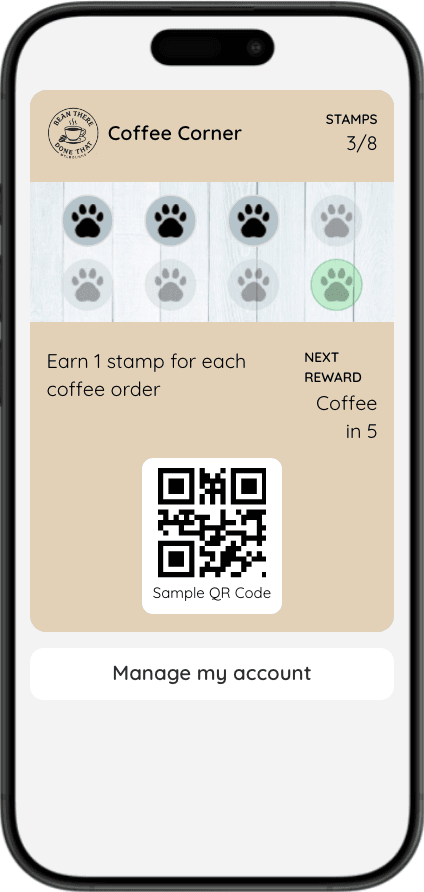
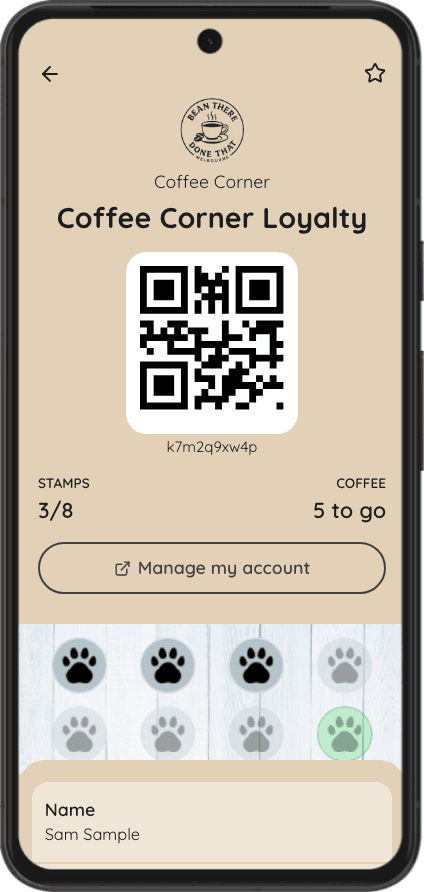
A stamp card
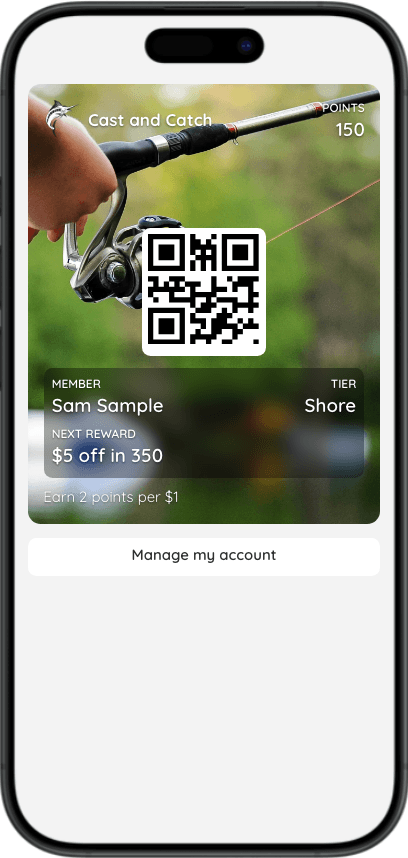
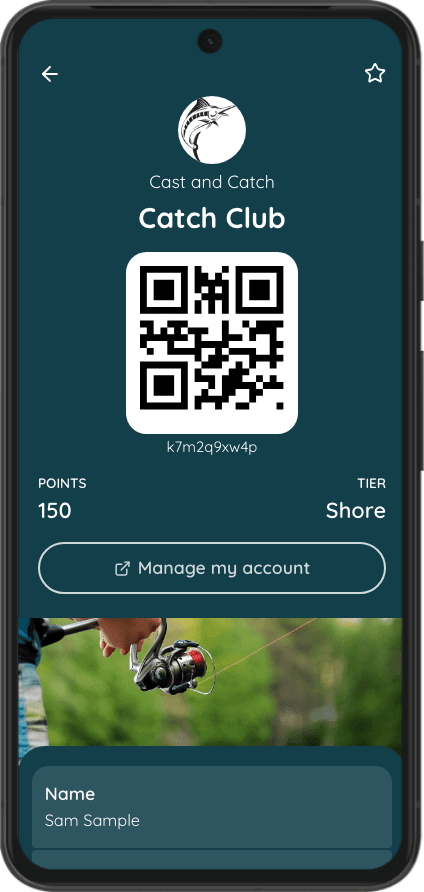
A points card
Key takeaways
- A stamp card rewards visits: one purchase, one stamp, and a set reward when the card is full. A points card rewards spend: points for every eligible dollar, and a list of rewards to choose from.
- Stamps suit high-frequency, low-variance businesses where most purchases cost about the same, such as coffee shops, bakeries, hair salons and car washes.
- Points suit businesses where spend varies widely, such as retail stores, restaurants and hospitality, because a $400 customer earns more than a $15 one.
- Stamp cards work because a short, visible goal pulls people back sooner as they get close to it; points cards work by letting customers save towards a reward they choose, and tiers add status.
- Stamps are simpler at the till and for customers. Points cost staff one step (typing the amount that earns points) and need rewards that are easy to understand.
Side by side
Stamp card
Points card
Rewards
Stamps: Visits
Points: Spend
The reward
Stamps: One set reward when the card is full
Points: A list of rewards; the customer chooses
At the till
Stamps: Scan, tap, done
Points: Scan, type the amount, confirm
For the customer
Stamps: "7 of 10", understood at a glance
Points: A balance, and what each reward costs
Big spenders
Stamps: Earn the same as everyone
Points: Earn more, and can move up a tier
At the till, the difference is one step: a stamp is a tap, points need the amount that earns them.
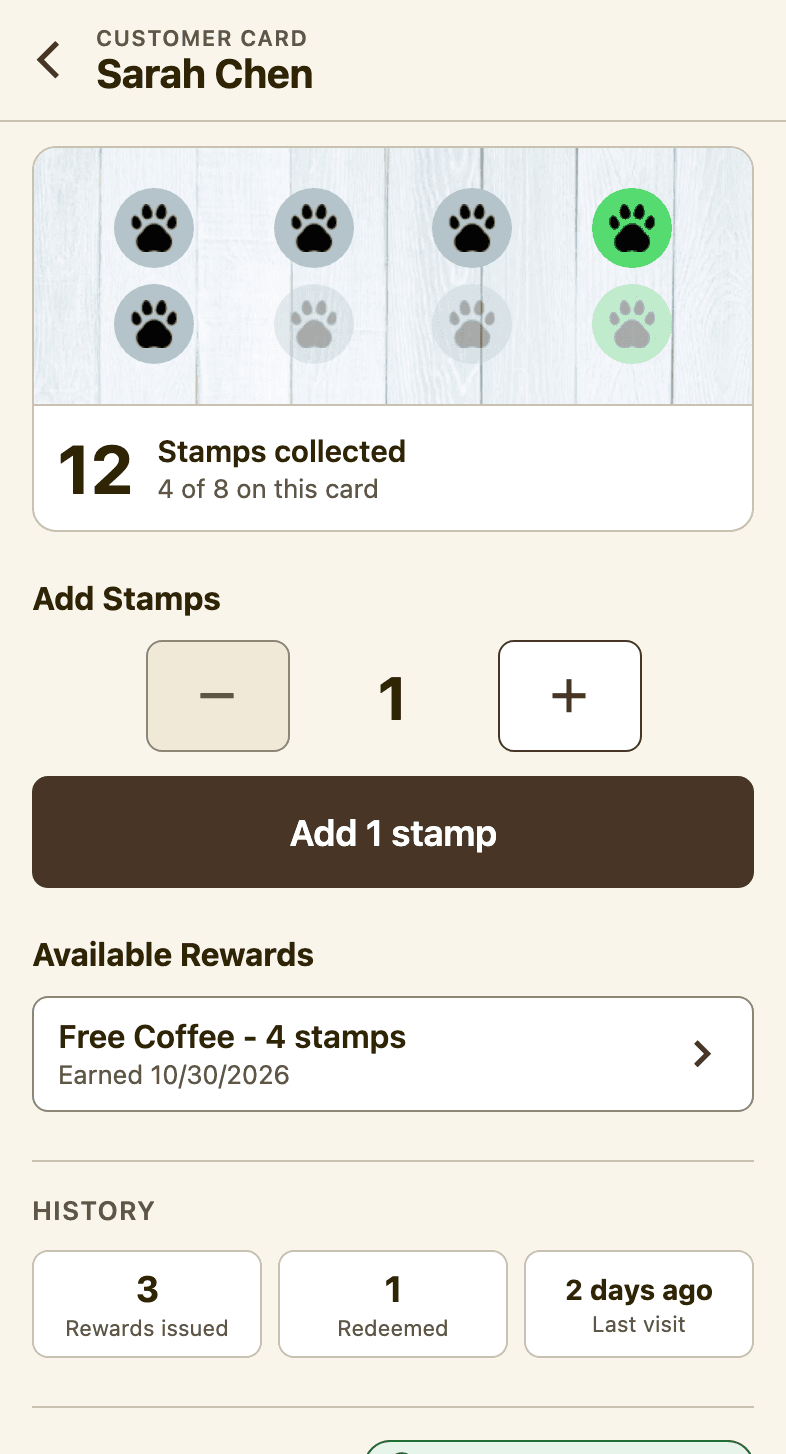
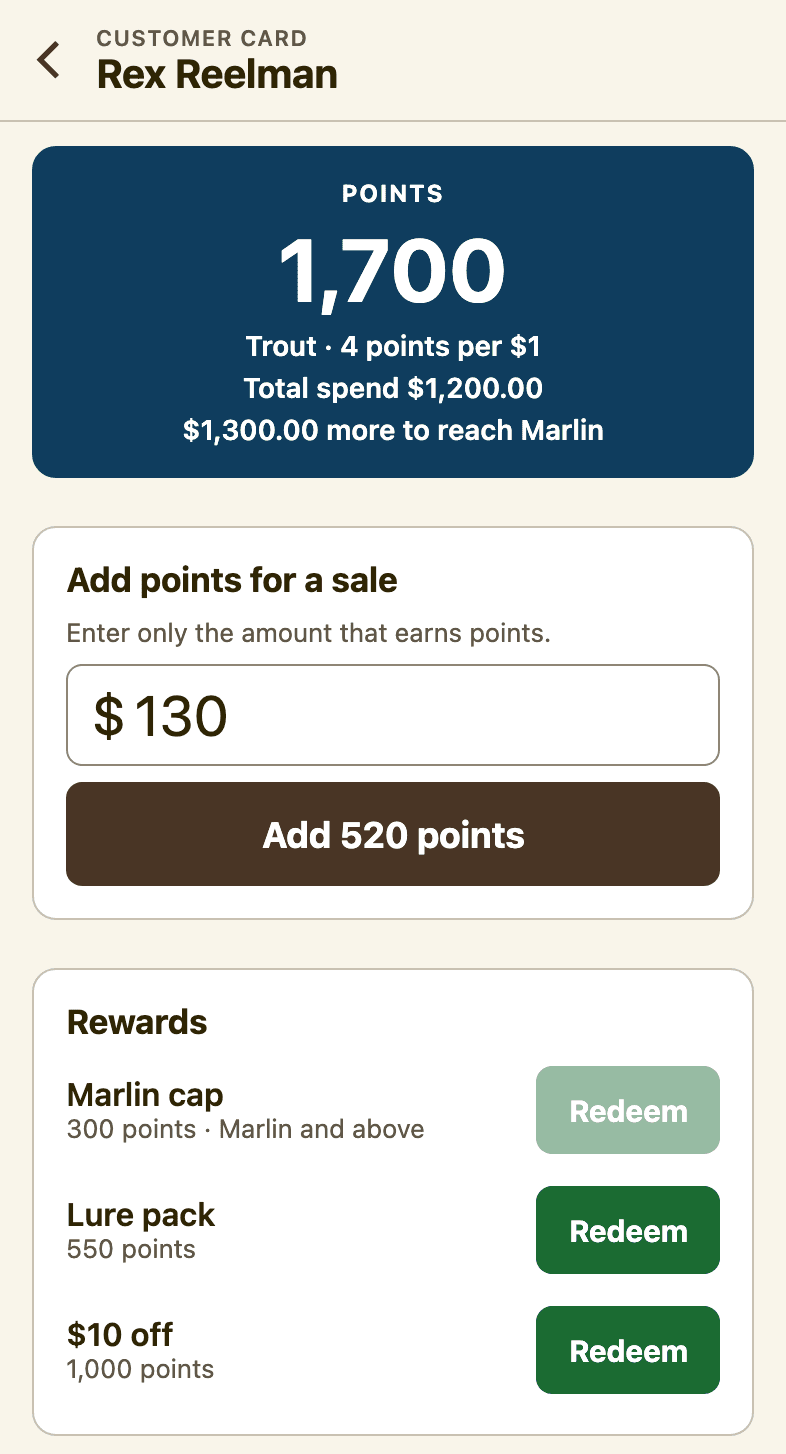
Stamp cards
The card everyone knows: buy nine coffees, get the tenth free.
- Each visit or purchase earns one stamp; 8 to 10 fill the card
- A full card earns the reward you chose
- Customers see where they are without reading anything
Best for: high-frequency, low-variance businesses like coffee shops, bakeries, hair salons or car washes, where most purchases cost about the same.
Why it works
A finish line pulls people back
Café customers bought coffee more often the closer they got to the free one.
Kivetz, Urminsky & Zheng, 2006
A head start helps
A car-wash card that started with two stamps already given was finished far more often.
Nunes & Drèze, 2006
Nothing to explain
"Two more and the next one's free" is the whole script. Simple cards get used.
Where it falls short
- A $200 customer earns the same stamp as a $5 one
- One reward for everyone, with no choice
- A long card (20 stamps for a weekly visit) is given up long before it's full
Points cards
The card Australians already carry: Flybuys and Everyday Rewards both earn points on every dollar. A small business can run the same idea, with rewards about what it sells.
- Points on every eligible dollar, at a rate you set
- A short list of rewards, each with a points cost; customers choose or save up
- Optional tiers: spend more over time, earn faster
Three tiers from total spend: Minnow from joining at 3 points per $1, Trout from $1,000 at 4, and Marlin from $2,500 at 5, with 500 bonus points for getting there.
Best for: businesses with wide-ranging spend amounts, diverse menus, or tiered offerings, such as retail stores, e-commerce, restaurants, or hospitality.
Why it works
The reward follows the spend
A $400 rod earns 80 times what a $5 packet of hooks does: fair to both, and best for your best customers.
Saving up is the appeal
Members hold points far longer than the maths says, because points feel different from money.
Stourm, Bradlow & Fader, 2015
Bigger rewards earn their place
The more effort a reward takes, the more people choose a treat over something practical.
Kivetz & Simonson, 2002
Tiers add status
A tier below makes the ones above feel elite, and people prefer programs with tiers.
Drèze & Nunes, 2009
Where it falls short
- Points alone don't create loyalty. A study of Australia's Fly Buys found only weak effects on repeat buying (Sharp & Sharp, 1997); supermarket members do stay longer (Meyer-Waarden, 2007). The card supports a good business, it doesn't replace one.
- Staff have to type the amount that earns points, and get it right
- A balance means little until the first reward is in reach
- Raising a reward's cost devalues the points customers hold, which the ACCC has called out
One fixed reward, or a choice
The bigger difference is often not stamps versus points, but what the customer is working towards.
A fixed reward
Everyone works towards the same thing and understands it. Best when one reward is obviously right: the free coffee, the free wash.
A choice of rewards
Customers pick what they want, or save for something bigger. Keep it to three to five, with the first one reachable within a few visits.
What each one gives back
~10%
A stamp card
Buy nine, get the tenth free gives away about one sale in ten.
~3%
A points card
3 points per $1, with $10 off at 1,000 points: about $333 spent for $10.
~0.5%
The supermarkets
Flybuys and Everyday Rewards: 1 point per $1, and $10 off at 2,000 points.
The supermarkets can be that mean because of their reach. You can't, and don't need to: choose a number your margin can carry for years, and a reward that feels worth having.
Which one is yours?
Four questions, and the answer is usually clear.
Choose stamps if
- Most sales cost about the same
- Customers come back every week or two
- One reward is obviously right: the free coffee, the free wash
- Every second counts at the till
Choose points if
- Your biggest normal sale is ten times your smallest, or more
- Customers come back weeks or months apart
- The right reward depends on what each customer buys
- Staff have time to type an amount at the till
Stamps and points on Keeperoo
Keeperoo runs both, on the same Apple Wallet and Google Wallet cards, scanned with the same Scanaroo app. You choose once, before your first customer joins, and all your cards use it.
- Weighing up Keeperoo against Square Loyalty? Read our honest comparison
Questions people ask
Sources
- Kivetz, Urminsky & Zheng (2006) — The Goal-Gradient Hypothesis Resurrected
Café stamp-card holders bought coffee more often the closer they got to the free one.
- Nunes & Drèze (2006) — The Endowed Progress Effect
A car-wash card needing eight stamps that started with two of ten already given was completed far more often than a plain eight-stamp card.
- Sharp & Sharp (1997) — Loyalty Programs and their Impact on Repeat-Purchase Loyalty Patterns
An early large study of an Australian multi-brand points program (Fly Buys): weak “excess loyalty” effects, and not for every brand in it.
- Meyer-Waarden (2007) — The effects of loyalty programs on customer lifetime duration and share of wallet
Supermarket loyalty cardholders stayed longer and spent a larger share of their grocery budget with the store.
- Drèze & Nunes (2009) — Feeling Superior: The Impact of Loyalty Program Structure on Consumers’ Perceptions of Status
Tiers create status. Adding a tier below makes the ones above feel more elite, and people prefer programs with tiers even when they don’t qualify.
- Kivetz & Simonson (2002) — Earning the Right to Indulge
The more effort a reward takes, the more people choose a treat over something practical: a reason to offer a bigger reward worth saving for.
- Stourm, Bradlow & Fader (2015) — Stockpiling Points in Linear Loyalty Programs
Members save points far longer than the maths says they should, because points feel different from money.
- ACCC — Customer loyalty schemes, final report (December 2019)
The Australian regulator on what points programs get wrong: unclear terms, and changes that devalue points members hold.
Flybuys and Everyday Rewards earning and redemption as published by Coles and Woolworths, checked 1 November 2026. Keeperoo is not affiliated with either.